
Bitcoin Valuation Models Update: Chilly Market with Recovering Momentum – The Sweat Combo
Quantile model, power law model, and VPLI update

Introduction
In last week’s article, “Momentum Just Flipped,” we argued that Bitcoin around $71K was no longer in a strong bearish regime. The point was that the market had finally worked off enough downside pressure for the momentum model to move out of defense. Our posture shifted accordingly: we stopped treating the market as a clear bearish regime and became constructive again while still respecting the need for confirmation.
So far, that call has held up. Bitcoin did not roll over into another major breakdown. Instead, it pumped up to $74K. That is exactly how a momentum framework proves its value in real time. It does not need to catch the exact bottom tick. It needs to recognize when the regime has changed enough that staying overly defensive is no longer the right trade.
This update asks the next question. If momentum helped identify the turn, where does Bitcoin now sit relative to its long-run valuation trend?
To answer that, we revisit the quantile regression model, the power law model, and the Volatility-Adjusted Power Law Index (VPLI). The short version is simple: the market has warmed from the extreme cold readings we saw in February, but it is still cold. Momentum improved first. Valuation has not yet caught up.

Snapshot as of April 15, 2026.
Quantile Model
The quantile model is still one of the clearest ways to frame Bitcoin’s cycle position. Instead of asking whether price is simply up or down, it asks where price sits inside Bitcoin’s long-run distribution of valuation regimes. Lower bands correspond to historically depressed conditions. Upper bands correspond to historically stretched conditions. As shown in Figure 1, Bitcoin has spent most of its life oscillating through these bands rather than drifting randomly around them.
What stands out in the full-history chart is that this cycle never developed the same sustained, late-stage overheating that defined the strongest blow-off phases of prior cycles. Price pushed up, but it failed to live in the upper bands for very long. Then it rolled over and mean-reverted hard. That matters because it suggests the market’s problem was not an extreme speculative overshoot that needed years to unwind. It was a cycle that lost thrust early and then fell back toward the lower end of its historical valuation structure.
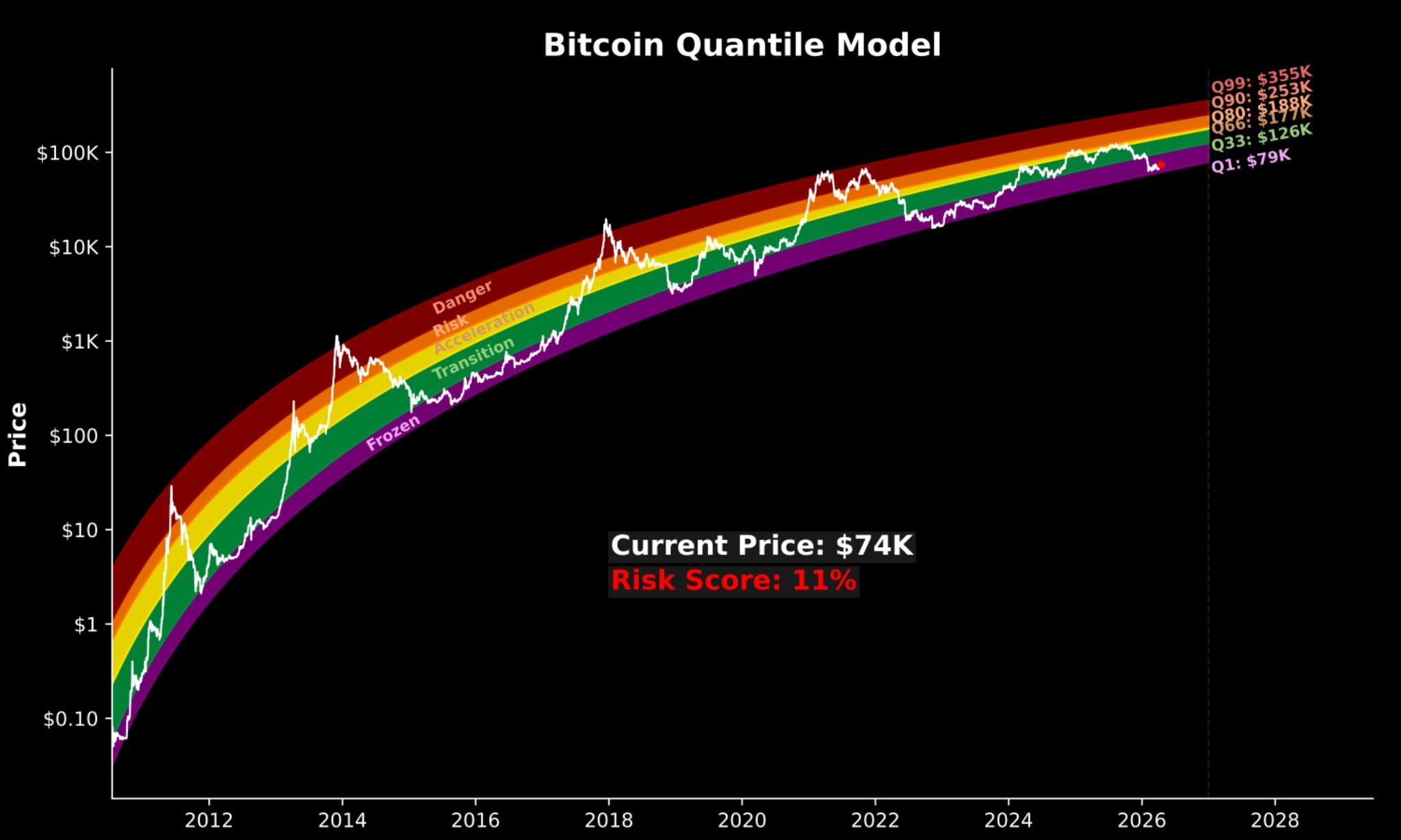
Figure 1. Bitcoin Quantile Model — full-history view.
The zoomed chart in Figure 2 gives the current read more directly. Bitcoin is around $74K, and the model’s risk score is 11%.
That is no longer as extreme as the February reading, when the market was sitting closer to the absolute coldest part of the range. But 11% is still a low reading in historical terms. The market has warmed somewhat, yet it remains far closer to depressed valuation than to euphoric pricing.
In practical terms, this means the recent bounce has improved conditions without making Bitcoin even slightly more expensive. The market can rally a lot more and still be cheap given the current deeply compressed base. That is what this model is saying now.
Price has recovered enough to confirm that panic conditions are easing, but not enough to say the market has entered anything close to a hot or even fully neutral long-run valuation regime.
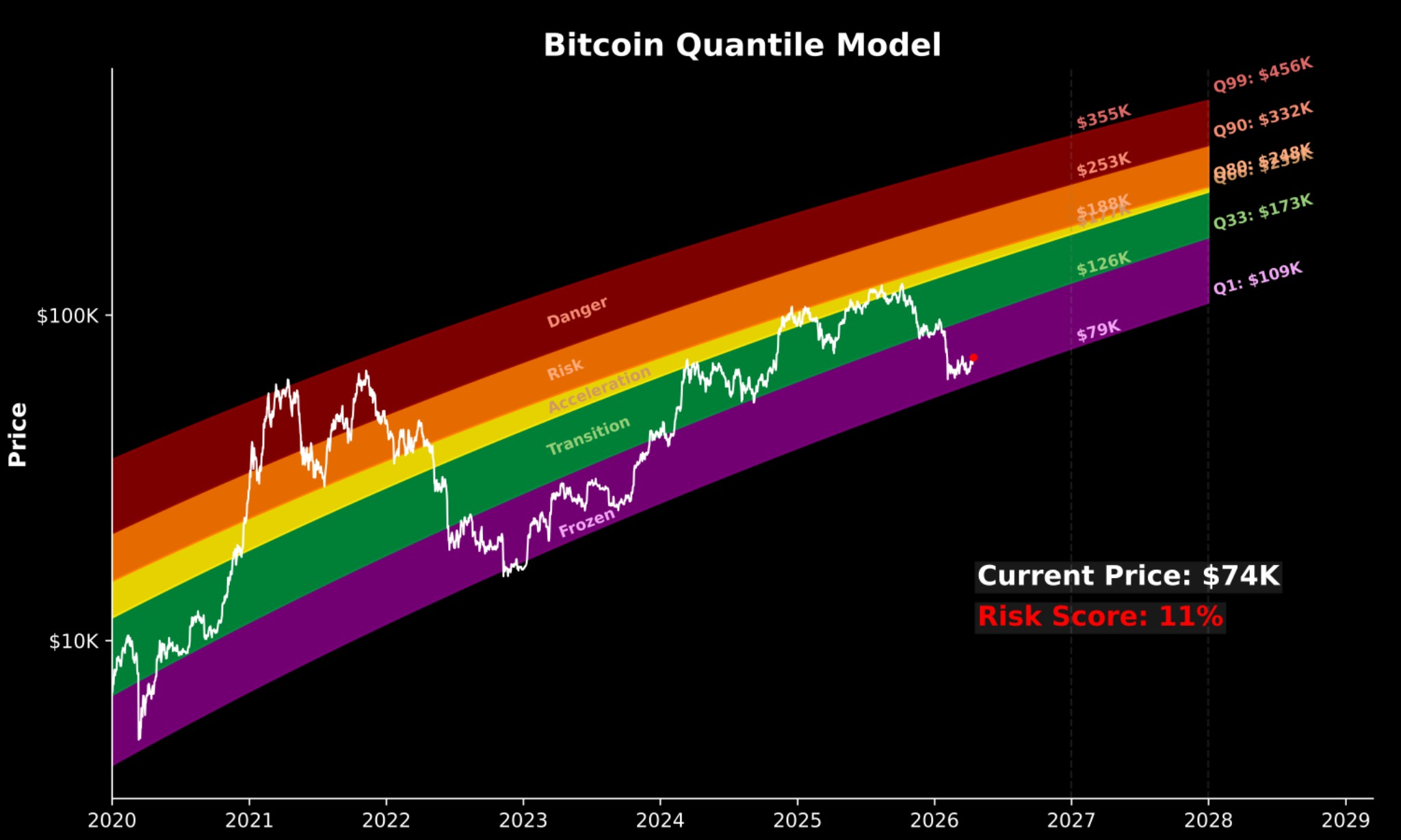
Figure 2. Bitcoin Quantile Model — zoomed view of the current cycle.
Power Law Model
The power law framework cross-checks the same idea from a different angle. Instead of asking which quantile band Bitcoin occupies, it asks how the price is behaving relative to its long-run adoption trend.
Figure 3 shows the answer across the full history. The pattern is familiar: Bitcoin overshoots above trend in euphoric phases, undershoots below trend in bear phases, and eventually mean-reverts toward the long-run path.
Right now, the market is still meaningfully below that path. That keeps the broader message intact. Even after the recent recovery, Bitcoin is not trading like a market that has already re-entered a stretched late-cycle condition. It is still trading like a market that is climbing out of a deeply discounted regime.
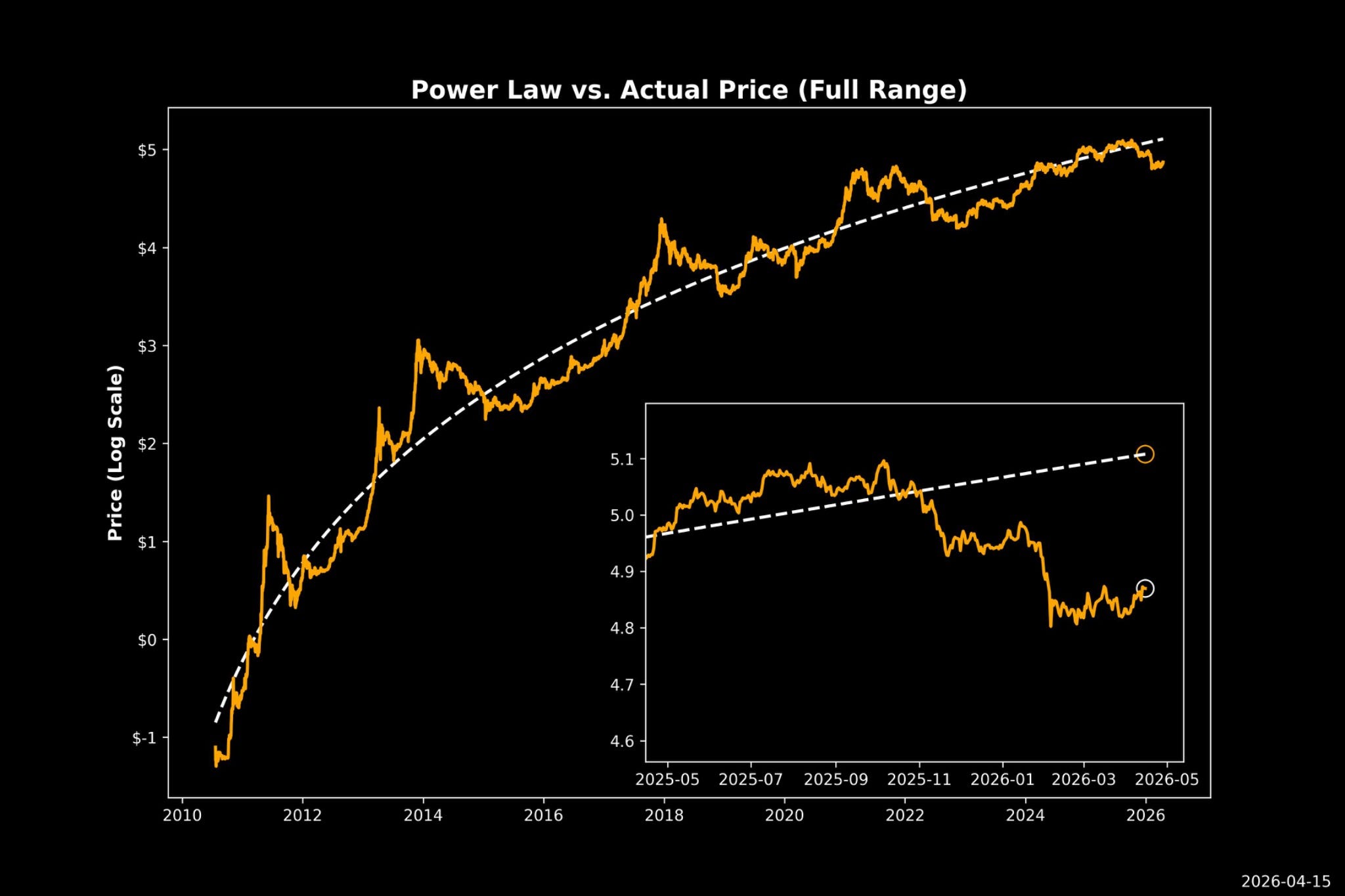
Figure 3. Power law trend versus actual Bitcoin price — full-range view.
Figure 4 makes the gap visible in the most concrete way. The power law price is about $128K, while actual price is about $74K. In other words, Bitcoin is still more than $54K below its long-run trend estimate.
That is a large dislocation. It does not guarantee immediate upside, but it does tell us the market remains cheap relative to the path Bitcoin has respected over time.
This is where the momentum call and the valuation models fit together cleanly. Momentum turned constructive first, near $71K, because the market had stopped behaving like a strong bearish regime. The valuation models now show why that constructive turn still has room to work with.
Price may have improved, but it has not yet closed the long-run valuation gap.
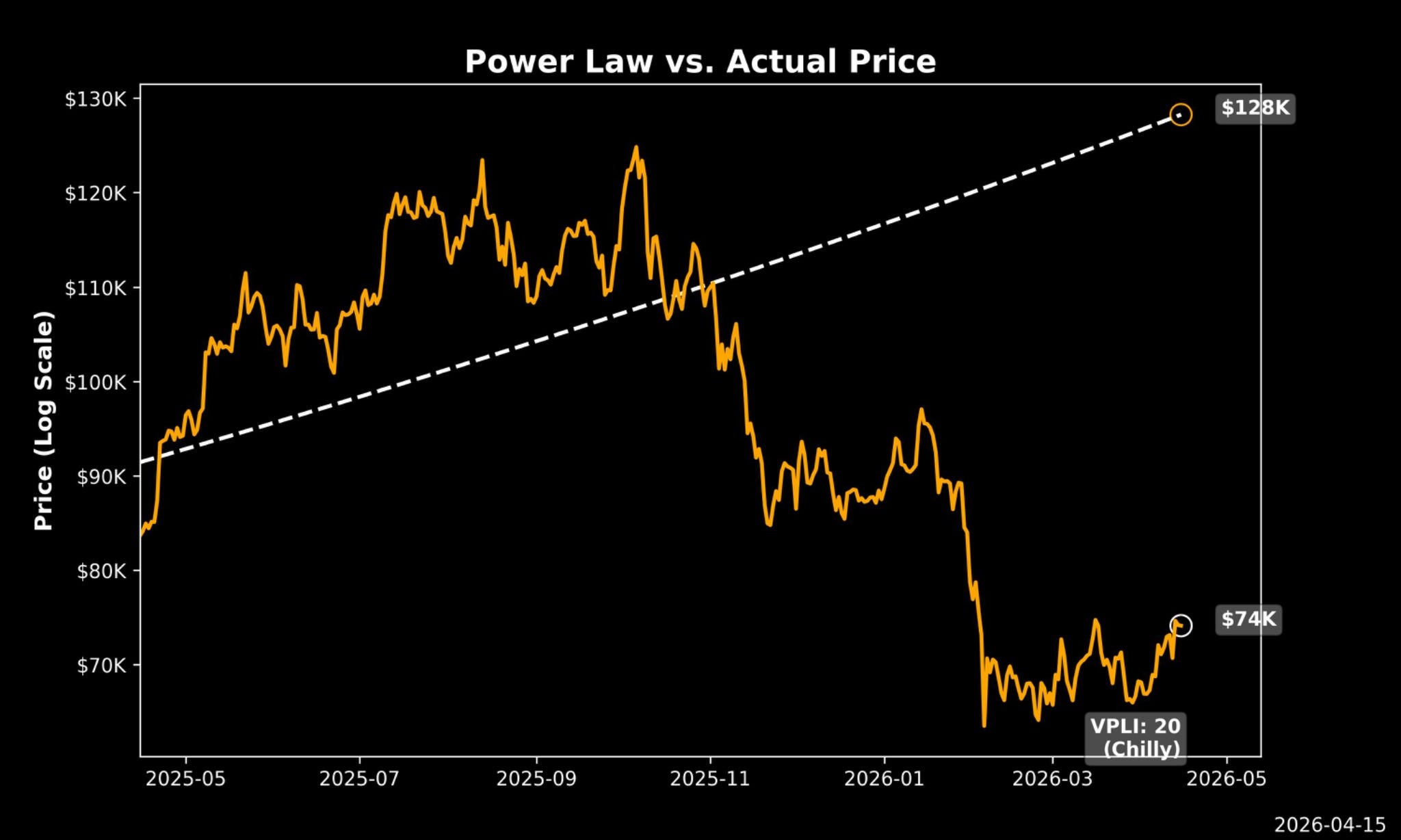
Figure 4. Power law trend versus actual Bitcoin price — last-year view.
Volatility-Adjusted Power Law Index (VPLI)
The most compressed way to summarize the power law picture is the VPLI. This metric takes the distance from the trend line and scales it by Bitcoin’s volatility so that dislocations can be compared more fairly across cycles.
Figure 5 shows the current reading at 20, labeled “Chilly.” That is slightly warmer than the extreme-cold reading we discussed in the February valuation update, but it is still firmly on the cold side of the spectrum.
That is the key point of this entire report. Momentum was right to flip first. The market stopped acting like a strong bear around $71K, and the subsequent price action validated that regime change. But valuation has not yet normalized.
Bitcoin remains below power law trend, the VPLI is still cold, and the quantile model still places price in a low-risk historical zone. The market may no longer be in outright panic, but it is also nowhere near overheated.
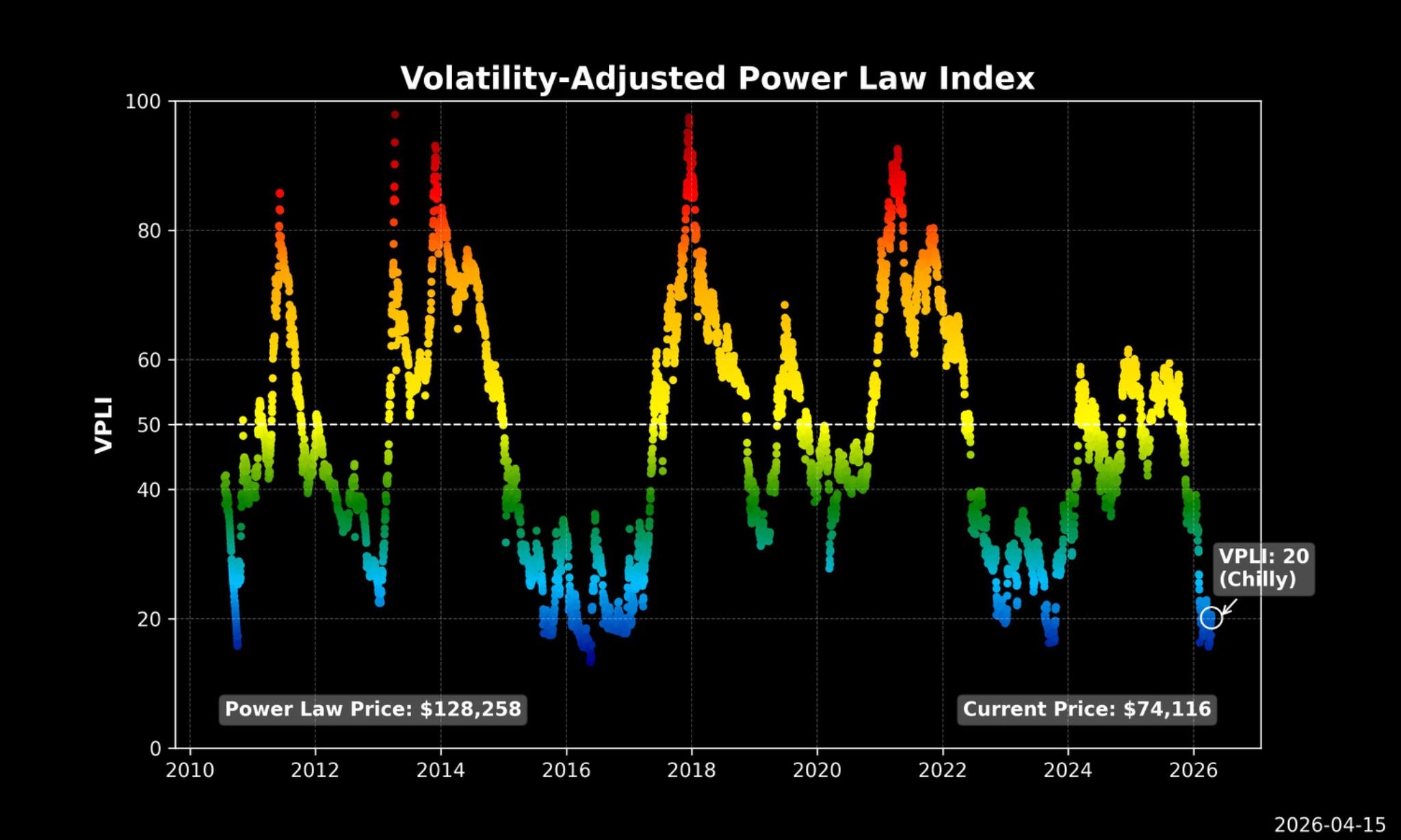
Figure 5. Volatility-Adjusted Power Law Index (VPLI).
Conclusion
Last week, we said the momentum regime had changed around $71K. That was the message in “Momentum Just Flipped,” and so far it has been the correct call. Bitcoin held up, pushed higher, and showed that the model was right to stop treating the market as a strong bearish regime.
This week’s valuation update strengthens that case. The quantile model now shows a risk score of 11%. The power law model still places price well below its long-run trend. The VPLI is still at 20, which is chilly. Put together, that means the market has improved and can improve a lot more without becoming expensive.
That is a constructive combination.
Momentum has already turned. Plus valuation is still cold. Historically, that is the kind of setup that gives upside room to breathe, even if the path remains choppy and even if confirmation still matters. The market is climbing out of compression.
The momentum model is doing exactly what it is supposed to do, and the valuation models are confirming that the move likely has more room than most people think.
Sina.