
Is the Bitcoin Bottom In?
Signs of seller exhaustion

Key points
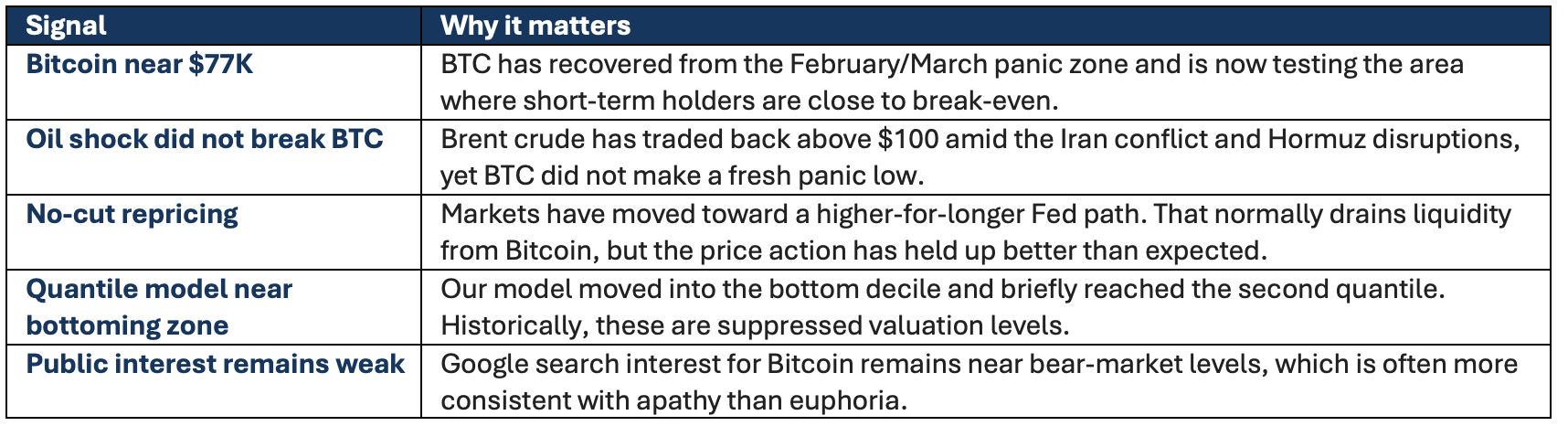
The point is not that war, oil shocks, or higher rates are bullish for Bitcoin. They are not. The signal is that THIS much bad news failed to push the price down.
The market gave us a pretty major signal
Take a step back from the daily noise and look at the structure of Bitcoin’s price action. After the Iran war broke out, bears had every reason to push Bitcoin lower. The macro headlines were ugly, oil was repricing higher, inflation risk came back into focus, and the expected path of Fed cuts deteriorated quickly.
Yet Bitcoin did not behave like an asset entering a fresh liquidation cycle. It sold off, but the sell-off was limited. It retested the lows in late April, absorbed the pressure, and then began to move higher. From the lows, Bitcoin recovered roughly 17%, which is not a small move in the middle of a hostile macro tape.
That is key. The Iran shock was not bullish. The shock itself was clearly negative. But Bitcoin’s refusal to break down after that shock is important. When bad news stops producing lower prices, the marginal seller may be running out of ammunition.
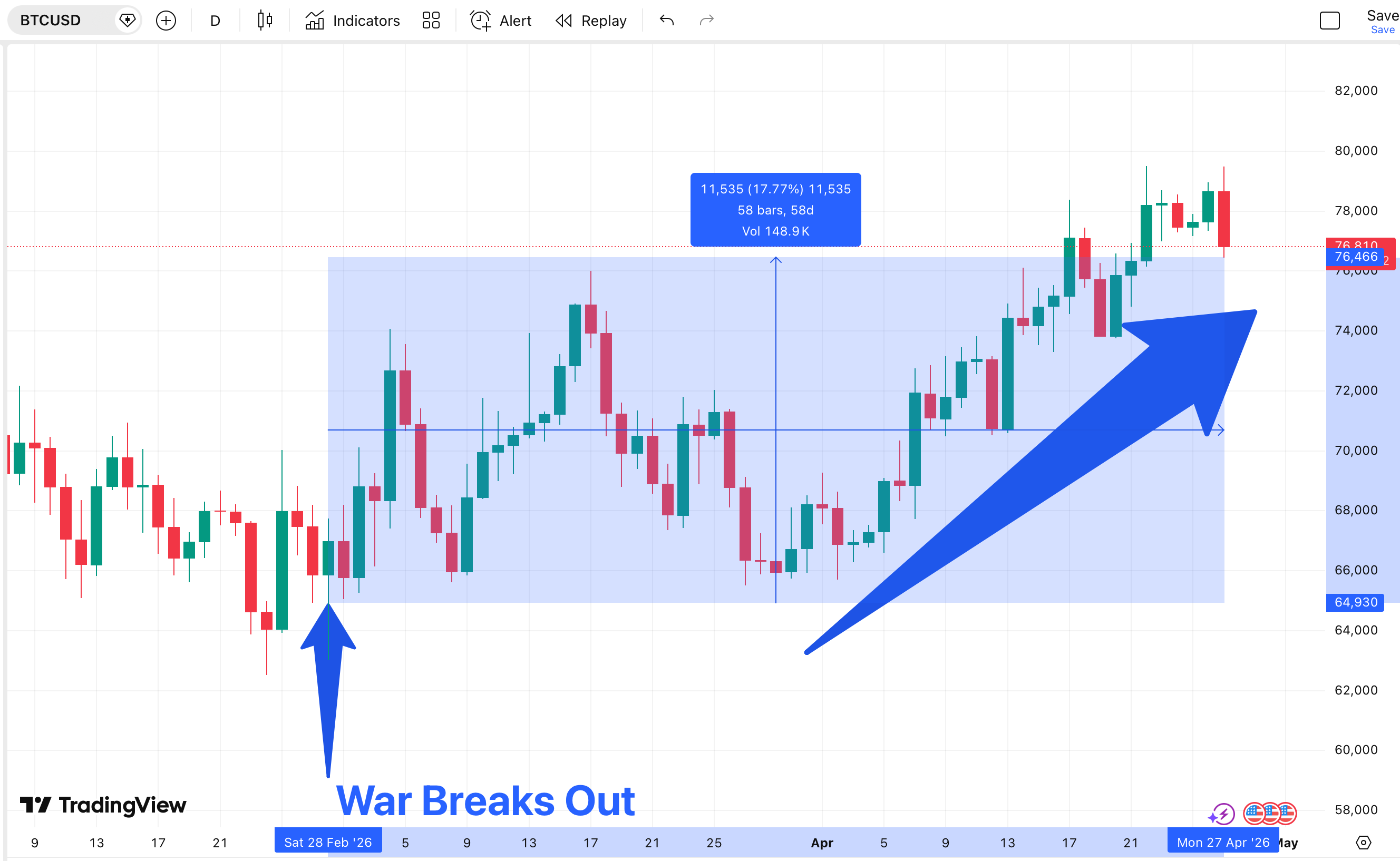
Figure 1. Bitcoin retested the post-war lows and then reversed higher, consistent with seller exhaustion.
Our momentum model had already flagged the trend change when Bitcoin was near $71K.
The macro shock was real
The economic damage from the Iran war should not be dismissed. Oil is the king commodity because it touches almost everything: shipping, manufacturing, agriculture, commuting, aviation, and consumer prices.
When oil rises sharply, the inflation impulse does not stay isolated inside energy markets. It spreads through the real economy.
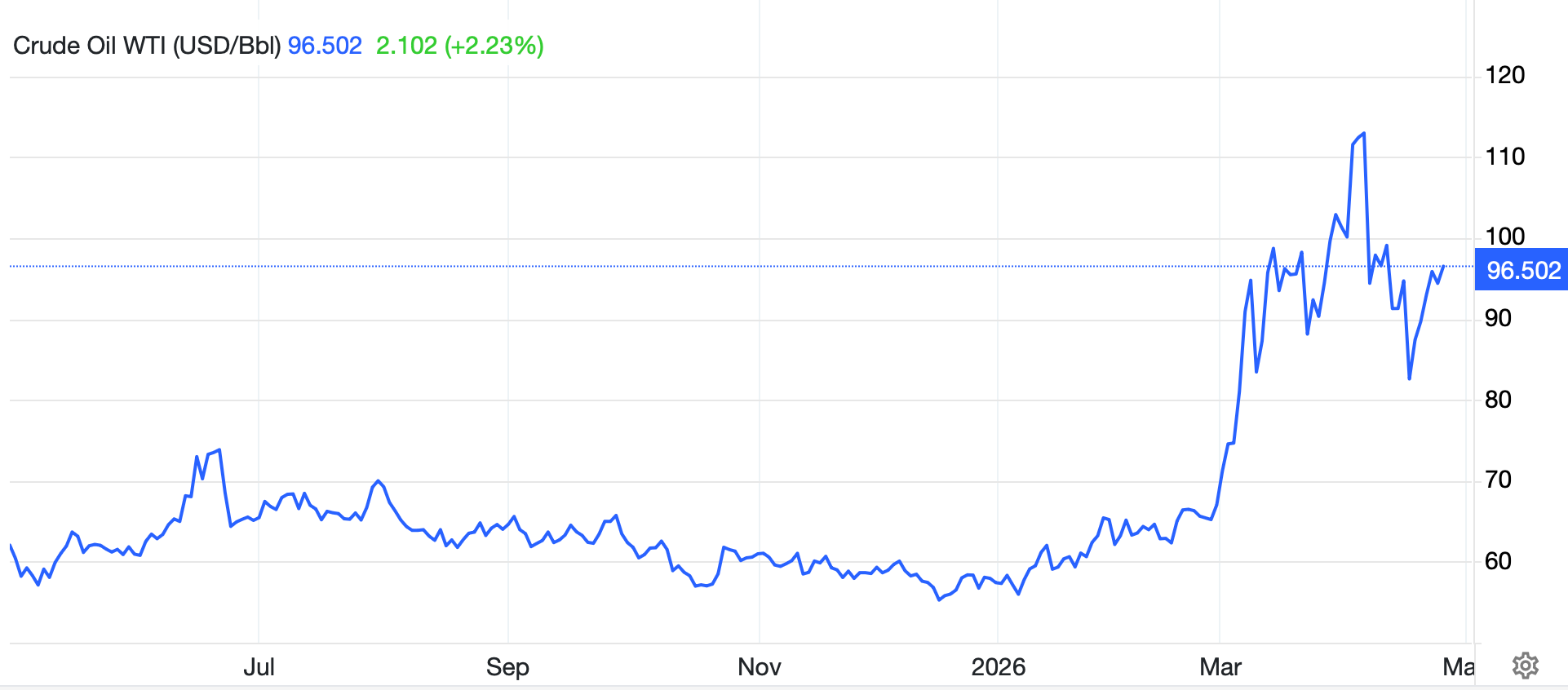
Figure 2. Crude oil repriced sharply higher during the conflict, reinforcing the higher-for-longer inflation risk.
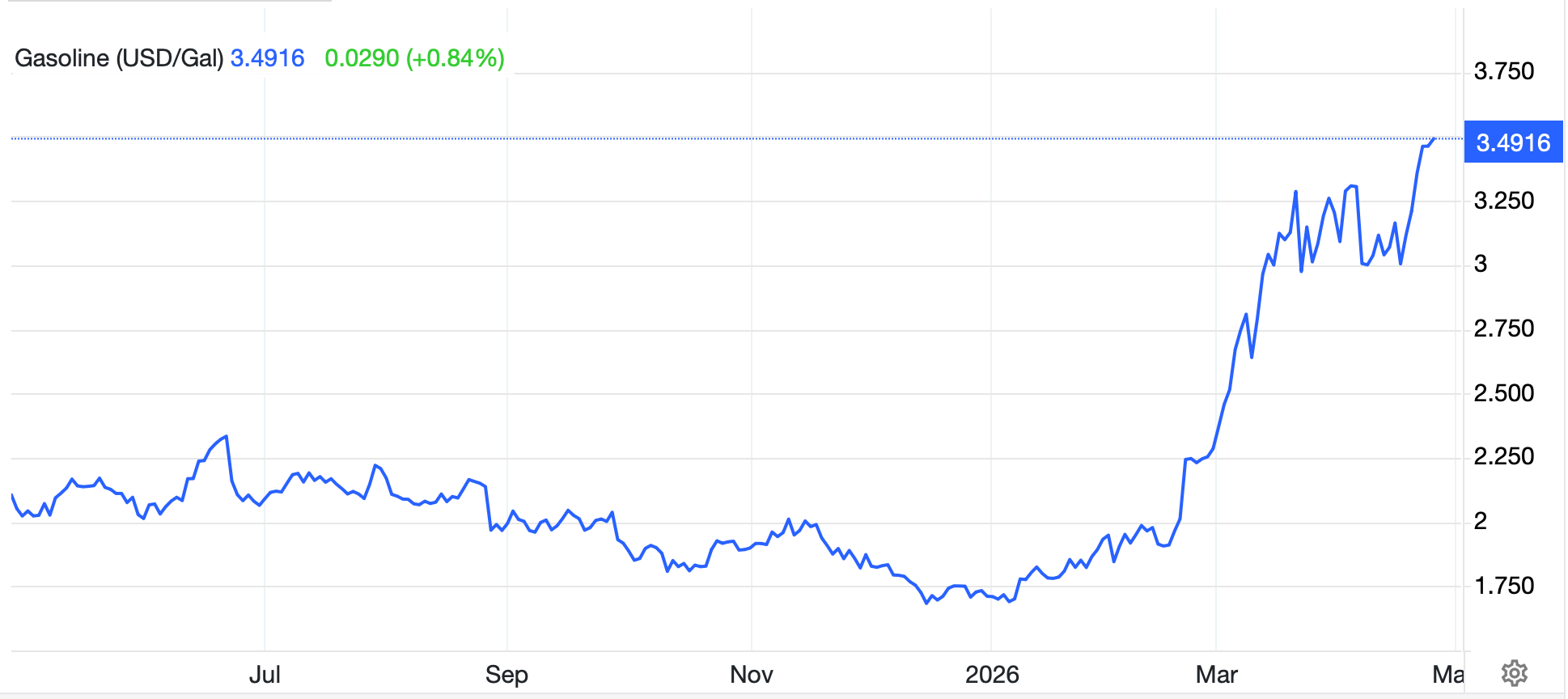
Figure 3. Energy-sensitive inflation pressure also showed up in gasoline prices, which affects consumer inflation expectations directly.
Brent crude has recently traded around the $108-$109 per barrel area, while WTI has traded around the mid-$90s, as the market continues to price disruptions around the Strait of Hormuz and stalled U.S.-Iran talks. Earlier in the conflict, Brent had already moved from roughly $70 before the war to above $119 at points. That is a serious shock to global liquidity and inflation expectations.
And macro analysts were all over it, predicting an imminent collapse.
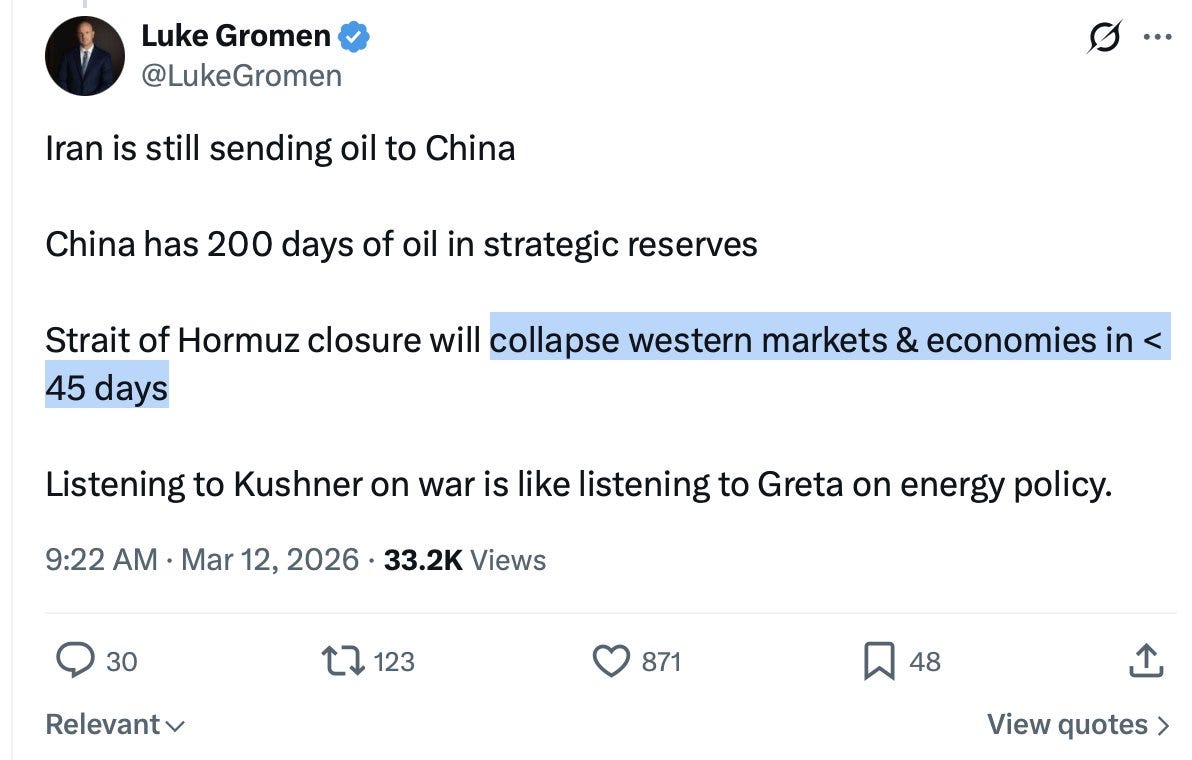
Figure 4. Example popular doom commentary from X.
This has a significant impact on Bitcoin because it remains a liquidity-sensitive asset. When oil pushes inflation expectations higher, the market becomes less comfortable with Fed cuts. Higher-for-longer rates raise the opportunity cost of holding risk assets and reduce the amount of speculative capital available to bid Bitcoin higher.
So the macro setup was not easy. The market had to digest an oil shock, geopolitical uncertainty, and a major repricing of the Fed path. In a fragile market, that combination should have been enough to produce a decisive breakdown. It did not.
Valuation models hit bottom already
Bitcoin’s decline from its October 2025 record high above $126K to the February/March lows was roughly a 50% drawdown.
